Monday, January 9, 2012

Las Vegas: America Town, USA


With fluctuating arrogance, I have stemmed more than a few debates on historical events or actors by rejecting the premise that they have breached the cannon of history. Admittedly, by definition, everything that’s happened (including Terrell Owen’s career) is history. However, in all practical sense, I like to say that “history,” as we can reasonably understand it, ends at around 1975. This is because everything after that time is too recent and so the consequences can only barely be hypothesized—not to mention the year is also a convenient, transitional milestone (Vietnam, Fran Tarkenton, etc). Events and actors in the 1980s and 1990s are too often discussed emotionally because people feel a certain, sometimes inappropriate or unnecessary, responsibility. However, I will adopt the crafted attitude of this post’s subject and bend that rule, because there is no other way to properly understand the city of Las Vegas.


Las Vegas (Spanish for “the shiny”) may have been founded in 1910, 1829 or when Mark Twain was in the fourth grade, but that’s all just prologue and usually riddled with tidbits on how early settlers and natives played primitive games of chance. Such anecdotal history serves as light-hearted justification for the modern sensibilities of Nevadans and proudly flung about by the state’s modern gaming overlords. In short—past that point, I know—Las Vegas didn’t really start to become Las Vegas until 1966, because that's when it stopped being an economic island.
Pictured: Las Vegas; metaphor.


Now, some are quick to note the Gangster coat of paint that covered in the city from a week after World War Part Duex through the encore screenings of the original “Ocean’s Eleven.” (You know, the slick, half-assed, celebrity packed, casino heist film that didn’t star George Clooney.) But any fears that the Syndicate--or organized goons of any kind--could so much as own a burger stand in modern Las Vegas are rawest nerves for current casino magnates like Steve Wynn and Arthur Goldberg. These men sue their way into social grace where their 1950s counterparts preferred having an unsavory past (if only to make negotiations easier).

In either case, when there is trouble, casinos deploy their lawyers with a blood thirst that’d startle Meyer Lanksy’s hit men. No, Papa Joe Kennedy and the mob men have no real progeny in Las Vegas. That coat of paint has been bulldozed as unimaginable, monumental, intentionally-collapsible labyrinths are built up and painted with a similar, though different, shade of paint that tested better with focus groups.
Focus groups also liked beautiful women and all that got us was "Slutty Al Capone."


In 1966, Howard Hughes sold his near $600 millions worth of stock and bonds and had a hole burning in his pockets of which the likes not even a Saudi prince has ever felt. $600 million. $6,000,000. In 1966. Adjusted for nowadays, that’s an ass ton of money. And crazy old Howard Hughes bought up everything he could. Not sports cars, mind you, but rather controlling share of several casinos and hotels. More than just providing buckets of material for a sequel (or two!) to Scorcese’s “The Aviator,” Hughes did what the government wasn’t allowed to do: he legitimized Las Vegas from a 20th century pirate port to growing cultural center. A real life city.

Now, it’s important to understand Hughes wasn’t exactly cutting the legs out from Fat Tony or anybody else. Far from. Really, Hughes might have just as well been the latest front for the organized criminals who could run their casinos and partake in any other endeavors under the pitch-perfect guise of a crazed billionaire’s late-stage ambitions. The former playboy industry titan may as well have just been another front. Hughes, to his (cronies’) credit, lay the groundwork for the city to come by having Hughes apply for his gambling licenses (required by law) without ever appearing before the state gaming commission. Before this point, the owners of any establishment were held accountable for their casinos and actually had to be of some moral standing to own a casino—or they had to bribe the commissioners. The insane and reclusive Hughes, though, became a corporation onto himself—though not entirely orchestrated by himself—and took over places he never so much as actually saw, leaving in charge person (alleged gangsters) he never actually met.

As a short aside, as Hughes continued to lose touch with humanity and looking more like a Gandalf-Holocaust victim, President Richard Nixon became more paranoid about his own connections with Hughes. Specifically how the WWII Captain of Industry donated over $100,000 to the president in the last campaign and how most of Hughes’ latest millions came from contracts with the CIA. Nixon became convinced the Democrats, in the 1972 election, would exploit his ties to America’s last robber baron and he saw to hire thugs lifted from a friend’s Las Vegas Rolodex. And so went the botched break-in at the Watergate Hotel.

With Hughes’ death in 1976, Las Vegas was free from one man’s mythological, nonsensical, possibly non-existent tyranny. The city was free to be owned by absentee landowners and faceless corporations. Before F.F. Coppola made the regrettable Godfather Part Three, Las Vegas had been completely remodeled. Not as America’s Playground, Sin City or an adult Disneyland, but as America itself. Unchecked, unashamed, America. Old Las Vegas was flawed; old Las Vegas was gone.

In fact, calling Las Vegas an “adult Disneyland” does a disservice to the city that brings in more tourists than actual Disneyland. Add on that children don’t have much money to spend on themselves and it’s pretty clear where the great money pile is. A more apt comparison to Las Vegas may actually be the holy city of Mecca. Though, again, more pilgrims flock to Las Vegas every year, offering up their own sacrifices to the dream of escape.

People pray all over the world, but they mean it in Las Vegas.

The city is simply too American. We love freedom, sure, but only because it sells. What we really love is, in fact, selling things. We sell cotton, lumber, land, guns and the idea that somehow because my drunk neighbor’s political opinion has the same mathematical weight as my own, we, as a country, landed on the Moon.

The gangsters of olde stole millions of dollars from cheating people at casino. But as made evident years later, they left untold billions of dollars on the proverbial table by banning from the premises women, minorities anybody not wearing a suit. Elizabeth Cady Stanton, Martin Luther King, Jr., Caesar Chavez and millions of others strove for a goal only made attainable by the one infallible dollar. Money is the equalizer. Sex, race, class, history and weight be damned; if your Franklins have their watermarks, you have a friend in the casino.

Thursday, January 5, 2012

NFL Predictions: Wild Card Weekend


Ah yes, the playoffs. Finally, we have arrived at the week that hosts the best wild cards this side of “Always Sunny in Philadelphia.” Of course any summaries of the regular season would be woefully inept and premature, so let’s get to the games.

Pittsburgh at Denver
NICK: Let me get this straight, Tim Tebow goes 7-1 in his first run as a starting NFL quarterback, winning most of the games in dramatic fashion. Then, in the most audacious comeback (not perpetrated on the Giants), Tebow lets the Broncos lose three straight games by a combined score of 88-40 to actually end their season. THEN, about thirty minutes after entering their locker room Tebow has the Chargers trump the Raiders, thus catapulting Denver back into the playoff picture. Regardless, Tebow’s tricks have been figured out and that 7-1 streak looks rather mediocre now that none of the fallen teams made it to the playoffs themselves. At this point, I think the Broncos would be better off playing Brady Quinn at quarterback—if for no other reason than to throw the Steelers one helluva curve ball. Frankly, I think the Steelers put together one of the quietest 12-4 seasons in recent memory (their 4 losses all coming from eventual division winners). Steelers will bring some thunder to Mile High and Tebow will go back to being one-half of a quarterback controversy.

MAC: The Tebow Train seems to have derailed. Tebow Time doesn’t even exist anymore. The Steelers, despite the uncertainty of Big Ben, seem like a guarantee to defeat the Broncos that backed their way into the playoffs. But I like magic. I love the idea that Tebow, who can’t get his completion percentage over 50, still has the ability to batter defenses. This Broncos team plays how the Steelers did before the Big Ben era. Basically this ground game is going to slowly chip away at teams. They’ll settle for field goals, but every now and again they will bust out a big play. And because of their clock management that’s all they need. High powered offenses have destroyed the Broncos. The Steelers aren’t really that. Keep the score low and one big play gives them the ability to hold on to a tight game. I say this week they get that play, and they beat the Steelers. Magic.


Cincinnati at Houston
NICK: For me, gauging the Texans is like trying to find meaning in a Clint Eastwood film. Sure, all the pieces are there, and none of the pieces are particularly weak—good at times even—but something just doesn’t add up. The sum of the parts is greater than the whole. It’s a valid point to say the Bengals are a soft 9-7 team, a middle child of the AFC North. Indeed, they haven’t beaten any playoff team; but with the injuries the Texans have suffered, Houston isn’t a playoff team anymore. Cincinnati wins and the 3 of the 4 remaining AFC teams hail from the same division.

MAC: Do we really want to watch this game? How much will Andre Johnson’s possible return affect the quarterback-less Texans? The Bengals have done a great job of beating mediocre teams (9-0) but lost to every playoff team they faced this season (0-7), including against the Texans in Week 14. Neither team has a good shot against New England or Baltimore. I think the Texans have a better shot of making noise in the playoffs with a top defense and rushing attack. Clearly I’m picking the winners based on what I want to see happen vs. what probably will happen so….. Texans.


Detroit at New Orleans
NICK: The Saints got humiliated in last year’s Wild Card game and so they’re going to be ready this time. Beyond that, they are a better team this year and comfortably undefeated at home. The Big Easy, named after my ex-girlfriend (boom!), has housed the latest remake of “The Greatest Show on Turf” as the Saints’ offense set new marks in yardage and points. Seriously, they’re scoring in New Orleans as if every week is Mardi Gras. Drew Brees is going to fire through the Lions’ defense like a Roosevelt hunting party. Saints.

MAC: I predict a lot of points, a lot of passing yards, Suh punches a child wearing a Brees jersey, Suh receives a suspension going into next season, Suh denies punching the child, Suh claims the child hugged his fist so hard that it seemed like a punch, video evidence makes Suh look like a delusional douche, Suh appeals, Suh loses appeal, Suh says he beat the fear into a QB that wasn’t sacked and threw for 300yds/4TDs. Saints march over the Lions.


Atlanta at New York (Giants)
NICK: Winners of 3 of their last 4 games, Peyton Manning, Jr. has led the Giants from the brink of their annual, characteristic, seasoning-ending collapse to a viable chance at coming within two games from the Superbowl. The Falcons, good or not, just are not a very interesting team to me. So, for drama’s sake, I hope the Giants win the chance to be crushed by Green Bay next week. New York.

MAC: Eli’s back has got to hurt by now. The Giants shouldn’t be in the playoffs, but Eli keeps playing football at an elite level. People scoffed when Eli described himself as being among the elite QBs, specifically Tom Brady. Little did we know that he would have arguably the best season of his career. Which is weird because the Giants have straddled .500 all season. The defense has an amazing pass rush and absolutely nothing else. The Giants are dead last in rushing and outside of Manning’s performance, they are in turmoil. Falcons on the other hand are a tough team to judge. They seemed to be rolling, but the Saints lit them up in Week 16. This is a game that the Falcons should win but Eli has kept surprising me all season and the Falcons are clearly vulnerable. Giants

Monday, January 2, 2012

2012: Rooting for Mother Nature

And so reality has caught up to the latest so-called futurist movie: “2012.” Even more so than “Independence Day” or “The Day After Tomorrow,” director Roland Emmerich staked a highly destructive concept on the future. Emmerich’s unofficial Calendar Trilogy capped off an inconsistent banquet of chaos much like capping off a real banquet with a forty of King Cobra.

The first act of the movie introduces so many characters that the whole ordeal runs like a montage, helped by the fact that destruction is imminent and so the audience need not fear the extended presence of flat characters. Perhaps an infinite montage is the only way to capture our world in some viewable way, which would then make the peripheral and background characters all that more realistic. Indeed, if everyone is just an extra in a stranger’s life, then witnessing the citywide decimation provided in “2012” is no longer just a special-effects showcase. No, “2012” is the most philosophical movie that was originally a futuristic movie but has since turned into a period-piece since Stanley Kubrick’s “2001: A Space Odyssey.”

Once one gets past the drab introductions, we are subjected to teasingly minor destruction—not unlike a Mexican restaurant that brings you a third helping of chips and salsa before bringing out the main course. This feeling of “get on with it already”—which I may have actually yelled—exposed my own misanthropy after only two beers. I wanted the cities to crumble, I wanted the hordes of people I’ve never seen to get smashed, crunched, launched or washed away.

I have often said that my number one goal in life is to become the world’s oldest person. This can happen with my own health or being around for the end game, preferably the latter. If I can only watch a football game for five minutes, I want to see the last five minutes. I want to say, “hey, I’ve got pretty good timing.” I want to see the culmination of humanity’s efforts, and then judge the presentation. Egocentric? Perhaps. But where is a more modest place to admit one’s own ambitions than in the most public sphere, here, online? This comes back around to me finally watching the heroes of the story drive a limousine through Los Angeles with an earthquake tailgating them. “Go faster,” I screamed at the enlarging crack. The neutrinos (or whatever) that destroy L.A. do a pretty good job but they fail to capture and flatten John Cusack and some guy with prominent cheekbones (meaning he’ll die by the end).
"Go neutrinos! That'll teach those script readers for rejecting my screenplay!"


When I thought the characters were done for, I dropped the remote in celebration. By the damnedest luck, a button was hit and I heard a voice. A German voice, laughing. “God?” I asked. No, it was not God. It was the Director’s Commentary for “2012.” Roland Emmerich was explaining the nuances of his movie. I had found a gold mine.

After movies and shows with black Presidents repeatedly turned to stories about major disasters, such as “24,” “Deep Impact,” “The Fifth Element,” “Idiocracy,” “Head of State” and “The Event,” I always found it a curious decision that fictional Americans would elect Danny Glover. According to Roland Emmerich in the commentary, the character was originally a white woman but was changed after the 2008 Iowa primary—which the most obsessive politicos will remember that Barack Obama (black guy) surprisingly beat out Hilary Clinton (white woman). Oddly, the fictional president has only one daughter (ala Chelsea Clinton?) and—here Emmerich missed the best social commentary—the President is a widower. Would losing a spouse make Hilary more elect-able? The movie “2012” says so.

Emmerich goes on to point out that government conspiracies could exist because some people believe dying is better than being told you’re going to die. Furthermore, some people may kill to keep a secret, kill to learn a secret, die to keep a secret or die to learn a secret. This all adds up to humanity arriving at our most collectively suicidal evolution. A strange argument to be sure, but one I can not immediately dismiss.

Other, smaller, tidbits are similarly staggering; such as, Cusack’s character (“Jackson Curtis”) being named in honor of rapper 50-Cent (a.k.a. “Curtis Jackson”). Even more audacious, Oliver Platt’s character is a government official who argues for misinforming the public in order to save lives and is named “Carl Anheuser.” This name was taken from the beer distributor Anheuser-Busch--which pronounces “Busch” like “Bush”…as in President George W.

Emmerich defends himself and how the studio pressured him into creating a shorter film with more explosions, especially early on. He also apologizes for the puns and the tongue-in-cheek destruction of Las Vegas’s Eiffel Tower (as derided in a previous post). He points out ridiculously obscure references to classic films such as “North by Northwest” and “Jaws”—references which I can’t remember, didn't notice the first time, or still didn't notice the second time.

My bafflement continued when Emmerich literally said, “If we didn’t destroy the White House, people would have thought we were afraid.” What people? Afraid of what? I don’t know! Also, apparently, all of the Chinese actors in the film were supposed to play Tibetan workers, which meant several had to learn their Tibetan lines phonetically—a detail that’d make Wes Anderson roll his eyes. Emmerich later draws emphasis on the heroes risking their lives, or not, for the sake of global billionaires or the emigrant workers.

The director-titled “Billionaires’ Revolt” scene showcases the monetary elite running, screaming and otherwise acting like the crazed mobs of nobodies the rich people had spent most of the movie paying out the nose to avoid. Some people just can’t die with dignity and Emmerich made clear that such distinction is not related to wealth or nationality. Fortunately (?) the richest, greediest, most selfish (in that they kept the ultimate secret) and exclusive category of people are saved and so demonstrates how, at least American, leaders would select 100,000 people if that was all that could be saved.

Only moments before lamenting on humanist priorities, moral ambiguity and an inevitable labor crisis, Emmerich admits he takes a certain glee in destroying religious structures. The trailer-condensed symbolism isn’t enough for Emmerich, who elaborates that only after the institutions are destroyed can the characters find “internal spirituality.” I mean…wow. Religiously, “2012” may be on par with “Seventh Seal” and other far more suspiciously intellectual (or foreign) films. In Emmerich’s view, you shouldn’t pray in a big church because it just might fall on you, metaphorically. And literally.

Artistically—and yes, that has just become a classification of discussion about “2012”—Emmerich cracked open his own mind and said how much of “2012” was written around various dream-like images. In fact, the main plot point came from the question, how does a movie promise the end of the world? One answer would be the visual of water flowing over the Himalayas, the Roof of the World. Secondary inspirations included Air Force One underwater, titling an entire city and exploding a national park.

In a world where Michael Bay can brag about how he makes movies for (the dumbest of) teenage boys, there is another voice; a voice that says big, studio, blockbuster movies are the best films to articulate a message advocating world peace and the steps necessary to get there. Smirk if you must, but next to Bay, Emmerich is Akira Freaking Kurasawa.

The problem with classics is that everybody knows they are classics. To criticize a classic ranges between futile and obnoxious, with the possible extent of offensive. Similarly, simply slapping the “classic” label on a film without the support of millions of others makes the effort irrelevant. Still, there’s no reason to think only Oscar nominees—annually categorized as modern classics—will age into the ultimate pantheon.

The predictions surrounding the year 2012 will be depressingly dated in a year, but now I’m not so sure the film by the same name will be.

Monday, December 26, 2011

Chasing Jazz: Syphilis, Capone and World War Two

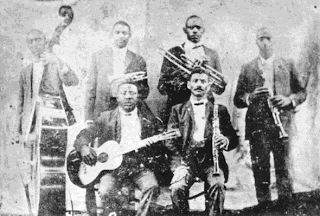
In America, jazz music is probably more popular in theory than any measurement of actual fan-dom; people say they like it, but it doesn’t often come up in their daily iPod shuffle. Perhaps jazz’s borderline eccentricity keeps any jazz musician or band from becoming wholly popular—and thus worthy of criticism, spite and condemnation. Still, jazz is probably the most American genre of music; not just in terms of its creation but how it directly influenced 20th century America.

It should shock no one that jazz—like country, rap and classical music—has racially specific origins. Basically, by 1890 the first generation of Africa-Americans who had never known slavery were trying to find work but still barred from anything besides the cheapest employment. And just like nowadays, society forced unwanted, uneducated and untalented individuals into the entertainment industry; unlike nowadays, these 1890s entertainers were not paid by the truckloads but rather next to zilch. In response, many black entertainers in the Deep South picked up old European instruments and attempted to mimic the songs, rhythm and music of an ancestral Africa. Seeking low-level venues, most of the musicians ended up at one point or another in the lowest of venues: the red-light district of New Orleans.
And in their early days, this band even opened for the Rolling Stones!


The New Orleans neighborhood of cheapest brothels and bars was known as “Storyville”—for spending a night there inevitably led to quite the story. And to live there was to create a masterpiece…or die from an exhausted liver. Over the next few years, the original noise took on varied forms and attracted more classically trained musicians. “Rag time” music became “swing music” and eventually “jazz”—a word with such perplexing etymology that it was literally awarded “Word of the Twenty Century.” If one follows historical gossip, the origins are unspeakable and somewhat related to prostitution. Let your own mind try to connect the filthy, filthy dots; but I, for one, take pride that slang was as subtly gross a century ago as it is now. Perhaps I’ll be able to use “jazz” in its originally vulgar sense before the end of this post. Unrelated: everyone should check out www.ski-ski-ski.com.

Anyhow, Storyville and its collective, nameless clientele were all happy, firm and good until around 1917, when America realized it was going to need to enter The Great War. That was the original World War; and like a lot of originals, it had a smaller budget, less known cast and was really created by the British. America, though, acknowledged it needed as many sailors as possible, and functional ports to the Atlantic Ocean. This meant cracking down on prostitution--which had always been illegal in New Orleans but just never enforced. New Orleans had allowed rampant prostitution for decades because most of the ‘johns’ were sailors passing by and it was awfully convenient for the local economy to have the out-of-towners drain a two-week paycheck in eight minutes. Anyhow, Uncle Sam nixes everyone’s fun and brothels and bars go belly up faster than in the aftermath of an oil spill. With this development, many jazz musicians teamed up into combos and went upriver, so to speak. And literally. They went to Chicago.

On a related reaction to WWI, Prohibition took effect and speakeasies boomed in the biggest city that combined port-convenience (Lake Michigan/Mississippi River) and brewery-proximity (thanks to the East Coast elitists kicking German immigrants to the Midwest). Anyhow, Germans were known for their beer and so drinking a beer was the equivalent of getting shot by the Kaiser or, worse, at least funding him. The same limited and pointless patriotism in America led to sauerkraut being renamed "freedom cabbage."

The Chicago speakeasies, desperate to find excellence among the thousands of competitors, fought for the best new entertainment. The bars, disregarding segregation expectations, helped people of all races fight off that harsh and vile grip of sobriety and became known as “black-and-white” or “tan” joints. All the bacchanalian fun had a price, though.

And that price was dealing with the very out-spoken and public figure of Al “The Original Scarface” Capone. In 1913, the U.S passed the 16th Amendment—which technically allowed for Congress to pass an income tax, but more subtly cleared the way for Prohibition (as the country would no longer need to tax alcohol). Oddly, the repeal of Prohibition did not repeal the Income Tax, but that’s straying a bit from the point. Capone, unlike other criminals, failed to report his ill-gotten gains and got himself jailed for tax evasion. The same crime that would later give Timothy Geithner the position of Secretary of the Treasury gave Al Capone eleven years in the big house. Indeed, cupidity is the downfall of some.

So Capone’s network of organized crime collapses and Chicago falls into a quarry of regrettable lawfulness—or at least as much as Chicago would ever see. This means opportunity needed a new direction; and probably would have swung even closer to Canada, as so much alcohol was coming from over the border. However, national prohibition was repealed in 1933 and so Vice and her sister Fun started to move back down to New Orleans. However, they stopped about halfway there and realized that Prohibition had helped along the popularity of the automobile and drastically increased Americans’ mobility. This meant, for a time at least, the most logical place to throw the never-ending party was in the middle of the country. And so jazz thrived in Kansas City.

As expected, Kansas City was as desperate as any city in the Great Depression to export a reputation and import raw capital. A local man named Tom Pendergast became unofficial ringleader of bawdy entertainment. He put some guy named Harry Truman in the Senate and then followed Capone in spirit by getting himself arrested for juggling baby seals. Just kidding; it was for tax evasion. It was just around this time that Japan ruined Vito Corleone’s birthday and the United States was once again called upon to escalate/end a World War.

Immediately unconcerned in 1942 with actually winning (or even fighting) in the war, the country pulled millions of innocent Japanese, Korean, Chinese, Vietnamese, Taiwanese and Mexican U.S. citizens from their homes and sent them off to build patriotic shacks in the desert and learn the rules of football (“Now that’s ‘merican!”). This left thousands upon thousands of homes in Los Angeles, and other West Coast cities, deserted—creating one of the most absurd buyers-markets in real estate history. On top of this, aircraft and munitions factories opened up and needed thousands of workers—mostly made up of African-Americans, who were, again, hindered from actually serving in the war.

For a time, Los Angeles's 4th Street became a hub of entertainment for black and white kids, now focused more on freedom and peer-pressure than getting as blisteringly drunk as their parents twenty years earlier. Stunning everyone who had failed to think five years into the future, General Motors made a killing from WWII production and used the unprecedented profits to buy city bus and rail systems nationwide (including L.A.!) and immediately shut them down. This had the dual effect of forcing Americans to buy more cars and allowing them to move away from the cities’ downtown districts. Federal, state and local funds went toward building and maintaining new neighborhoods that disallowed non-white homeowners and so the American inner-city ghetto, as we now know it, was formed.

At the same time as this staggering discrimination, Europeans were thrilled to accept any American-style entertainment. Not entirely because they thought us all heroes, but mostly because their industries had been bombed into ashes and life is only so tolerable without some form of manufactured escapism. In short, jazz music—and, my more dear expertise, Western films—became widely popular while 1950s Americans grew bored and pharmaceutically sedated. Ultimately, young plebian Europeans (and a couple of Americans) slaked their restlessness by giving jazz and, the closely related, folk music genres an inspired edge. And thus was born Rock 'n Roll.

To come back to the vulgar etymology of American music, the term "rock n' roll" did not originally describe the music but rather referenced how young people supposedly responded to it. Specifically, they rocked (on their heels) and proceeded to roll (about in their beds). Yes, "rock 'n roll" is a 1950s equivalent to "gettin' jiggy wit it."

While an epilogue to the jazz era may not be entirely appropriate, an admission that jazz is not what it once was should be inarguable. With absolutely no evidence, I blame Generation X and their relentless desire to sub-divide every caveat of entertainment, forcing me to acknowledge my own continued, incorrect usage of the term “jazz.” Surely at many points I could have specified the genres of “New Orleans Dixieland,” “big band-style,” “Swing,” “Be-Bop,” “free jazz,” “Latin jazz,” “Afro-Cuban,” “acid jazz,” and “nu jazz.” In failing to do so, I likely deserve any scoffs coming my way. In response, well, they can go kiss my jazz*.


*Man, I hope I used the original term correctly there.

Thursday, December 22, 2011

Going to Crazy Town: You Coming Along?


There is a presidential candidate who “toughens his wrists” by wrapping cords around them and hanging from a tree. While not subjected himself to various forms of self-torture in the wilderness, he shoots live ammunition at twigs and trees while jogging. And he doesn’t just carry a gun while exercising, either.

He received some attention for bringing a pistol onto the Harvard campus before giving a speech there. He claimed the campus was not immune to his gun-totting ways because he carries a firearm in lots of public places…and when walking around his house.

Also while at his house, he has been known to randomly jump over tables, chairs and couches just to prove (to himself or others) that he could. When not rivaling his adolescent sons in boyish roughhousing, this candidate occasionally allows bouts of narcissism and signs photos of himself to give to family members, employees, friends and enemies without their request.

He had to publicly promise animal rights activists that he would not kill any animals while visiting Yellowstone National Park. However, he broke that promise by killing a mouse that crossed his trail path. This candidate then kept the mouse body and sent it to the U.S. Biological Survey.

On more distant trips, his behavior becomes even less predictable. When traveling to Africa, he packed along over 70 books. These did not include the three dozen books he has written himself.

Years ago, he wanted to raise a volunteer, machine gun motorcycle militia division to quell violence along the American-Mexican border. The U.S. Army begged him to do no such thing. A short time after that, the man wanted to be promoted to a major general despite having no military service in the last twenty years.


Okay, so he’s not really a candidate in the 2012 election, but would you vote for him?


Congratulations. You just elected Theodore Roosevelt.


Oh God Yes!

Monday, December 19, 2011

"The Lady's Dressing Room": The 1730s Romantic Comedy

“The differences between men and women” is a vast expanse of joke material. And if the comedy staple was a body of water, it’d be the Ganges River: so over-used and polluted with filth and laziness that to claim a fresh joke (cup of water?) from this reservoir would be laughable if not so sickening. With the genre now castigated, I feel it is appropriate to note how one work of entertainment pre-dates even the classic (and, frankly, hilarious) rom-com “Shop Around the Corner” by nearly two hundred years.

Yes, by turning on one’s sarcastic radar—hence forth referred to as ‘sar-dar’—Jonathan Swift’s poem, “The Lady’s Dressing Room” becomes less of a searing indictment of female vanity and more of a sly wink and eye-roll to the convoluted dance of courtship that seemingly holds together the very fabric of society.


Content-wise, the poem is about a young man who walks into a lady’s dressing room when she is not around and is disgusted by the mess he finds. For the next hundred, rhyming, lines, Strephon (the man) expresses voyeuristic contempt at the effort his would-be lover goes through to be presentable in public. Rags used to remove make-up, brushes that have dandruff and hair between the bristles, dirty towels, used toothbrushes, tweezers and more are worthy of condemnation to Strephon. Is he disgusted that his previously lovely companion is revealed to be a blank (or ugly) canvass? Does he feel lied to? Deceived by a woman’s fabricated beauty? Seems unlikely, as he is at least able to identify the tools of beauty this woman uses—oppose to some prehistoric monkey baffled by an imposing monolith. Perhaps it is just enough to be disgusted that women can be disgusting. The content of the poem is essentially that of pulling back a translucent curtain.

It is a long-winded description that yields so few actual revelations that the whole effort smacks of cruelty, and indeed has been condemned as misogynist. For whatever reason, men are allowed a certain degree of physical imperfections—and usually even defended as either 'character' (ex. wrinkles) or necessary practicality (ex. peeing in public). Moreover, the male body is riddled with mystery--I’m talking about nipples and armpit hair, mostly--and so any effort to be anything more than utilitarian in public is decried as “feminine” or “metro-sexual.” Regardless, the poem’s critique of women’s vanity and apparent self-obsession with looks is as culturally striking today as it was in Swift’s time or when the church compiled The Bible or years before that.

However, all previously articulated understandings of Jonathan Swift’s poem need to be thrown out with the bath water when one remembers the poem’s author is Jonathan Swift. Swift’s “A Modest Proposal” is to “The Lady’s Dressing Room” what Danny Boyle’s “Slumdog Millionaire” is to “Sunshine.” A popular work, while commendable, overshadowing a lesser-known, more densely layered, production. The point being that Swift’s scathingly sarcastic critique on the poverty and oppression facing the Irish has since catapulted him into the title of “his day’s Stephen Colbert.” Perhaps some people still believe Colbert is a conservative commentator--as that is why he was asked to perform at the, painfully awkward, 2006 Correspondences' Dinner. And those same people are allowed to believe Swift was sincerely lambasting women.

In the last decade --a post-Alanis Morissette era-- Internet-users have twisted and corrupted the word “ironic” to such a degree that the word is barely used for its original intention—which, in fact, might be ironic. It’s confusing, so simply just trust me when I say Swift is being ironic in “The Lady’s Dressing Room,” as in his other works.

Fortunately, with our ‘sar-dar’ on, it is possible to detect Swift was satirizing men at least as much as women in “The Lady’s Dressing Room.” The earnest shock Strephon undergoes is as ridiculous as anything he finds. Anatomically speaking, men and women are humans; failing that, at least living beings. And anything living can be gross. Even puppies. That we understand the unspoken aspects of privacy is what makes the aforementioned curtain translucent. We know it exists, but to maintain civility we don't talk about it...just like Brendan Fraser's career (BOOM!).

As written, “Thus finishing his grand survey/The swain disgusted slunk away/Repeating in his amorous fits/ “Oh Celia, Celia, Celia shits!” (lines 115-118). The appropriate reader response: no shit, you idiot. Strephon, for pulling back the curtain, examining and detailing everything he sees, is the more vulgar of the romantic couple. He is the one that has spoken about the unspeakable—made unspeakable only by common knowledge. Few secrets are kept by any two people and so any secret kept individually by half of the world’s population (ex. women poop) would be less likely than everybody standing on one another’s shoulders until we reached the moon.
"Houston, forget about the Space Shuttle program, I've got an idea!"


Ultimately then, the poem is satirizing the tenets of traditional courtship—tenets broken by every generation of young people immediately after the origins of any societal guideline. That there are normal relationships or normal people is the allusion romantic comedies feed and feed for the sake of fabricating conflict in their story. Celia is weird for presenting herself unnaturally and engaged in such faux-privacy. And Strephon is weird for be disgusted by the effort he puts on Celia to be unnatural, not to mention the disrespect for her faux-privacy. And both of them are weird for thinking they are weirder than anybody else.

Everybody is weird but every so often, two people have compatible weirdness and, well, that's just what we call "love." Or so I was told by a friend who once claimed to be in love. But this allusion of normalcy is as necessary as the allusion of privacy. As then as now, all we have to do is not talk about it and both will be true.

So thanks a lot, Swift, you ruined society.

Thursday, December 15, 2011

MILLER'S CROSSING: Fantasy History


I am a man of many tastes. (NOTE: poisonous tastes for my cannibal readers.) And on a particular, or perhaps every, night some time ago, I combined writing, drinking and watching one of my favorite films. Not owning any movies that are explicitly about drinking, I decided to just put in something about gangsters and call it good. So that’s how I ended up with “Miller’s Crossing” on the TV and two forties of Mickey’s malt liquor on my end table.

Mickey’s, ah yes, the sweet green embrace of mediocrity, my mediocrity. In the green bottle, I can only surmise that the drink itself is in fact green. A green liquid similar to what may have given the Green Lantern his superpowers—obviously I am not familiar with the comic book’s mythology. As far as I know, Mickey’s carries no real popularity and thus doesn’t suffer the stigma of being popular. This web site is only barely about alcohol though, so I’ll let it drift.

“Miller’s Crossing” doesn’t take place in any real city, nor really a specific time. As most of the characters are drinking during most of the scenes and the cops are occasionally interested in trashing nightclubs, it can be assumed to be during the Prohibition Era. Perhaps even a Prohibition Era in the future? Oh man, that’s be a great film concept. Just ban something other than alcohol and boom...a helluva story. Magic, perhaps?

Historically thinking, I have to say people in the 1920s drank between a selfish amount and a courageous amount of booze, or “hooch.” Simply, I don’t know how later generations had any alcohol left for them at all. Speakeasies make modern college bars look like a Mormon community. People would get off work, go home, go to bed, wake up just past midnight, go eat breakfast and then hit the town. They’d gamble, drink and dance until they literally had to go to work that morning. Unfortunately this meant showing up drunk more times than acceptable to people like Henry Ford, so Ford implemented a company-wide “Social Department” that cracked down on employees’ vices and canned their asses for anything less than model citizenship, not just work-based behavior. I seem to have strayed from the film. Regardless, we have our setting.

"I'm sorry, I'm recovering from a night of Four Loko...why are we in the woods?"


The opening of “Miller’s Crossing” is almost a parody of “The Godfather” in that there’s a slow focus on an Italian spilling his guts to a quiet mob boss. In fact, the opening line (“I’m talking about ethics.”) is carried with almost identical weight as “I believe in America.” Similarly, the speaker in each film is taking an audition-length route to ask for a license to kill while several cohorts and advisers drink liquor in the corners of the room. The intro scene acts as almost a red herring, a false set-up, for a movie that isn’t a parody but rather a familiar sandbox with familiar characters that the Coen Brothers move around. It’s as if they are neighborhood kids that discovered a new gadget on one your own toys that even you didn’t know about. Trying to make an honest dollar on a fixed fight isn’t just a throwaway line, but rather a theme of the movie.

Tom Reagan (played by Gabriel Bryne) swirls his glass, the cubes hitting the edges. Is his mind spinning? Is he nervous? I don’t know. It might just be Bryne having no real control over his own tendencies. I regret noticing this in the first scene because I suspect I’ll now see it in every following scene. Following this scene, Reagan wakes up with the biggest hangover this side of an Ed Helms movie and seeks the only cure known to man: more liquor and Marcia Gay Harden.

In one of the film’s best scenes, Leo (Albert Finney) and Reagan drink while discussing the whereabouts of Verna (Harden). Each of the characters know more than the audience and so the performances seem to change based on repeated viewings. Reagan also comments that his liquor is “better than the paint we sell at the club”—which makes me wonder if the quality of liquor since the Roaring Twenties has gone up like automobile safety or down like Bryne's movie career. We both take another drink.

The whole movie has a lot of the virtues and trappings of a typical Coen Brothers fare. We have an “evil incarnate” character, money as the driving motivation, linear plot lines, and multi-character storytelling. Hell, several cast members are hold overs, such as Francis McDormand, Steve Buscemi (a 21st century Peter Lorre) and John Turturro.

The plot continues with scene-starting lines such as, “Give me a stiff one.” During a police raid, Reagan is quick to grab a bottle of booze, or perhaps just floor cleaner, off a table before complete destruction—the destruction itself (in the real world and movie world) done mostly for show, not practicality. Reagan, looking for answers in the complicated plot, goes back to Verna’s crib for another drink and I begin to regret my dehydrating run earlier today. And yes, to a scene, Reagan swirls the ice in his glass, preferring the action of holding a drink to actually drinking.

Occasionally the film's audience is treated to violence with a little more orchestration than Francis Ford Coppola put together but with a certain gratuity not unlike “RoboCop.” Regardless, Reagan handles good news, bad news and boredom with the same antidote: enough liquor to knock out a team of mules. Tom Reagan gets beat up, no less than twenty people utter the line, “Jesus, Tom” and more drinks are poured, swirled and drank—though that last step might only be by muscle memory anymore. When people stop drinking, mistakes are made and can only be fixed by people drinking themselves back into oblivion.

I think Gabriel Bryne was just weird looking enough to not be a typical movie star but also not weird looking enough to be distinctive. Kind of a Gary Cole-slash-Sean Penn thing going on.
Burn...?


“Miller’s Crossing” is far from a documentary but I do think people drank more generations ago than now. Maybe water just wasn’t as safe then. Maybe people didn’t need to worry about driving drunk with their horses and get wrapped around a tree. It is strange then to read about historical figures (such as President Warren Harding) being considered heavy drinkers in their own times. When drinking after every meal was the norm, one would have to be swimming in the stuff to gain attention as a heavy drinker. Nowadays a guy can barely reach for his third beer in as many hours without disapproving looks from family members and strangers at soapbox-height.

But for all the drinking in the movie, nearly every gulp of escapism is only the first in what must be assumed to be a long, normal night. Only once is Reagan actively drunk, but he still carries himself with the confidence off all drunks and the eloquence of none. Reagan might be the boss man of Drink Town, USA—much like yourself—but he will not wake up with mysterious bruises, pee in public or otherwise string together enough forgotten introductions to mimic a real social life. No, Reagan at his worst is us at our best after one, two or ten too many drinks. Then again, I couldn’t see him writing a movie review either. Win for me, I suppose. I just think I could be a gangster is all.

Actually it’s just amazing that the characters in "Miller’s Crossing" had enough self-control to not pour a round of drinks at the ending funeral scene. Instead, Reagan soberly watches the girl get away. I don't think he chases after her. Wait. Did I miss something?

Okay, wait, now John Malkovich is beating people up. This isn't the same movie. When did I put in "Man in the Iron Mask?" Aw well. Isn't anybody else ever really proud of themselves when they can cook anything after having several drink? Shit. I got no frozen pizza.

I guess I'm walking to Jack in the Box.

Monday, December 12, 2011

Awkwardness: Nick the High School Newspaper Writer

Just for kicks this week, I've dug up a pair of stories from my personal history I wrote for the weekly newspaper in high school. One is a real news article; the other is just a commentary article that I probably had to rough somebody up to get published, because, really, it's barely anything. I omitted the names in respect to the living.

Originally published 4/20/2007 in "The Mentor":

The Bloody Truth by Nick Adams

Dozens of Manhattan High School students lay bleeding in the North Gym at the West Campus on April 25. No, it wasn’t an unfortunate PE class, it was the recent Student Council-sponsored blood drive.

Just like earlier this school year, students and faculty members of MHS were given the opportunity to give blood and save lives. The principle runners of the blood drive were seniors R- Anderson and H- Clark.

“There’s a lot of new donors,” said Anderson. “I think it’s a new experience [for most students].”

J- Tooill, the Red Cross team supervisor commented that the blood drive went smoothly. According to Tooill, they take 500 ml of blood from each donor. And any blood flavor was welcome, from A to O.

“I feel like you need blood to live; it’s the oasis of life,” said Clark.

This spring, the Student Council started setting up multiple stations and chairs around seven o’clock. Many elected members, and some from general assembly, brought food for the blood donors. Several blood specialists represented the Red Cross, which also brought some food.

“What’s a better way to start off a Wednesday than to save lives?” said senior K- Thomas.

In theory, each donor gave enough blood to save up to three lives. Times that by the scores of donors and you get a lot of saved people. But not just in Manhattan. All the collected blood is shipped off to Wichita and processed and then sent out to hospitals all over Kansas and parts of Oklahoma.

Many, if not all, of the donors from this drive feel proud that they are helping their fellow man. Senior N- Johnson, a recent blood donor, acknowledges that “it’s a great cause”. To him and many others, the temporary uncomfortable-ness is a small price to pay for the end result.

“The help here is great,” said Johnson. “Plus you get out of school.”

To future potential donors, Tooill suggests everyone should make sure to drink plenty of fluids and eat a good breakfast the morning of donating. Thomas offers much more blunt advice to potential donors by simply adding, “Man up!”

-----------------------------------------------

A Fearful And Celebratory Look into the Future by Nick Adams

The following article is an actual high school newspaper article from the arguably distant future. No part of the article is fictionalized:

Ringing in the Year 2050 by Robit Adams.

Robit here, grandson of the writer/dancer Sir Nick Adams. It’s that “beginning of the year” time of the year again. But rather than simply recap the previous year, I plan to recap the first half of the first century of the third Willennium (I can’t believe the Fresh Prince actually got it renamed).

I guess some of the problems still exist that we faced in 2000. For one, the Middle East sectarian violence has increased. It’s really sad actually. I thought the Baldwin Mid-East Peace Tour was going to star-strike the region into giving up violence (may Billy’s under-appreciated soul rest in peace). Oh well, most people don’t live forever.

Isn’t it odd that 50,000 movies will come out this year, yet none will be as good as the Wayan’s brothers’ timeless classic, “White Chicks”? They just don’t make movies with heart anymore. Even “Time Inns Are Forever,” the most financially successful movie of all-time wasn’t that great. Granted James Bond using a time-traveling hotel to go back to the 20th century and stop the Kaiser was one of the more realistic plots, but where was the love?

Everyone should note that 2050 will mark the 35th anniversary of the, hilariously ironic, end of WWIII. On a vastly different note, everyone probably grudgingly remembers the Clinton scandal several years back. Did former-President Hilary Clinton REALLY think she wouldn’t get caught rigging the election of President Chelsea Clinton? Three of my dads are still angry that it took eight years to prove it though.

It’s a strange time we live in where robots can actually feel love and, incidentally, feel pain. And randomly catch on fire. Though we do need to try building better robots since the Human Cloning Project fell apart after the successful, yet questionable, cloning of Mary-Kate Olsen.

It hasn’t been an easy half-century, that’s for sure. For instance the 37-cent coin creation controversy. Well, I guess the creation wasn’t as controversial as the decision to put Tom Arnold on the coin. And then there was that Constitutional amendment leading to a certain three states being bombed into uninhabitable ash fields. That was the biggest turn in American opinion since they discovered iPods caused ear cancer!

In some ways I imagine people from fifty years ago would be disappointed in our lack of progress. Our cars still run on gasoline, but who would have guess we would find an oil reserve in the least likely, and cutest, place? Not to mention how that “Life on Mars” hoax set us back trillions of dollars over 30 years ago. And let us have a moment of silence for the (tasty) animals that are now extinct. We loved your meat too much African Elephant, Hybrid Spider Monkey and Cow.

Friday, December 9, 2011

NFL Predictions: Week Fourteen


Houston at Cincinnati (-2.5)
Nick: The Texans are 9-3 (and winners of 6 in a row) because they play in the AFC South. The Bengals went on their own 5-0 run exactly because they didn’t play anybody else in their division. You can’t play third fiddle in a conference with the Ravens and Steelers and expect to be a playoff contender. Strangely, being third banana (or fiddle or whatever) has worked out well for T.J. “Who?” Yates, the now-starting quarterback for the Texans. With no managerial direction, the Texans recently picked up Jake Delhomme and Jeff Garcia—two more quarterbacks who have a combined 96 years in the NFL. Seriously, Houston has become the football equivalent of a “Rat Race” remake, complete with a smorgasbord of C-level stars. How many quarterbacks do they plan on using? They now have five with serious NFL experience, and none that will celebrate a Division Round playoff win. Still, fuck it. Texans.

Mac: Despite an outrageous QB carousel, the Texans just keep winning. Tate took the reins this past Sunday and still beat a solid Falcons team. The Bengals on the other hand have done a great job of holding off inferior opponents but haven’t had enough steam to beat playoff teams. If the Bengals can hold Arian Foster to a modest performance then their corners should take advantage of an inexperienced QB. Even so, this is a well-rounded Texans team that is built to outlast a team like the Bengals. Texans

Philadelphia at Miami (-2.5)
Nick: The Eagles and the Dolphins are meeting at the middle of inversely related seasons. True to their respective mascots, the Eagles have absolutely plummeted from pre-season highs and the Dolphins, a team that annually struggles to keep its head above water has actually risen from the “Suck for Luck” depths. Actually, among any of the bottom-tier teams, it seems the Dolphins are actually trying to win and doing a helluva job, too. Meanwhile I’d say the great Philadelphia-area will be drunk on Sunday in a vain effort to numb a pain whose cause can’t be diagnosed. Because of the mysterious failings, I think Andy Reid should be packing his bags. Desean Jackson might have a bit more passion with Michael Vick on the field but I’d give only even odds that Vick finishes the game. Philly’s LeSean McCoy is still one of my favorite rushers and tearing up the end zone this year. I think this will be one the games that makes no sense at all. Eagles.

Mac: Both teams are 4-8 but each have a total different perspective on their current situation. The Eagles have fallen on their faces. The Eagles still have the fastest offensive in the NFL, but after the early season meltdown they have finally quit. The DeSean Jackson situation has gone too far. None of the off-season pick-ups paid off. It’s also fairly amazing that Andy Reid quits coaching after every job saving season. Word of advice, just get rid of him before he lucks out and Michael Vick has another great year. Dolphins on the other hand are playing lights out defense, dominating 4 of their last 5 games and are a confident team that looked abysmal through the first 7 games of the season. While I can’t imagine the Eagles getting blown out for the third straight week, Dolphins win.

Kansas City at New York (Jets) (-9.5)
Nick: In case people haven’t picked up on it, I live in Kansas City and so picking the Chiefs is essential to enjoying the game in a public atmosphere. Basically they could be playing the best team ever (actually I think that’s coming up next week) and I’d still have to pick the Chiefs because about the time that I’m branded a disbeliever, well, that’s just too much. It’s no different than rooting for America in the Olympics even when its some sport I have never heard of but clearly a life-or-suicide situation for some loser country half-a-world away. I also love the Olympics because it’s the only appropriate time everybody in the country gets to be on one side and scream at “the others.” Chiefs win by forty points because Rex Ryan can bite me.

Mac: Let’s be honest, I’m going to pick the Chiefs. I could sit here and make jokes about the $2.5 million flea-flicker but my only hope is for Orton to play. I don’t think Orton is the future, but he is the right kind of QB to prove that this offensive has been held back by Matt Cassel. Is it too much to ask that without the starting QB during the toughest stretch of the season that we actually do good enough to win? Yes, it is. Instead I will root for a strong performance from Orton that finally wakes people up to the need for Matt Cassel to be replaced. Also the Chiefs are 7-5 against the spread, the Jets are 5-7 so Chiefs at least beat the spread.

New Orleans at Tennessee (+3.5)
Nick: The Saints’ defense allows nearly 400 yards a game but nobody gives a fart because the offense is countering with damn near 33 points a game. Drew Brees is the best in the league at the deep throws and just may be the lone highlight holdout this year in a position otherwise dominated by Aaron Rogers. The Saints will get their second chance at the Packers in the playoffs, but are they better than they were in Week One? No. Only the biggest twist of the season could stop the Packers at this point…perhaps some late-season resurgence of Tom Brady or a sniper in the stands during Week 15. Also, running back Chris Johnson’s “comeback” was against the Bucs and the Bills; he’ll be back to 50-yard games before long. Three and a half point spread is a gift from the gambling gods. Saints.

Mac: I don’t know what changed but Chris Johnson is finally back. That won’t win them this game. Saints are going to make every game a high-scoring thriller this year. While Johnson maybe back on track, this game will not be won by rushing. Brees keeps on pace to crush Marino’s pass yards mark, Saints win.

Chicago at Denver (-3.5)
Nick: Last week, the Bears were beat in Chicago by Tyler Palko. Broncos.

Mac: Tebow wins games. Exclusively running the option will not work week in/week out in the NFL. Tebow has a long way to go at QB, no matter how many average teams he beats. Nobody has run the option at this level in the NFL because nobody had the perfect QB. Tebow is that QB. The truth is we don’t know if Tebow will succeed, just as nobody knew that Aaron Rodgers would work out or that somebody like Kyle Boller wouldn’t. The NFL is full of extremely talented people that have to dedicated themselves to the game of football, 365 days a year. Their development is influenced by their team, their coach, their family, the media and even the fans. The development is a continually thing that will work out or it won’t. Vince Young has a skill set similar to Tebow but the pressure of the NFL derailed a winner that didn’t quite fit the QB mold. So instead of explaining why Tebow is amazing or terrible, I’ll just watch a football player test his talent. Tebow finally won a game last week using his arm, the first of his career. If he can do it this week, the lore of Tebow will grow. If not, we will have a lot of questions and Tebow will have a long week. I personally don’t think Tebow will win games against playoff teams. But Broncos win.

New York (Giants) at Dallas (-2.5)
Nick: The Cowboys lost to the Cardinals by six last week. The Giants lost to the Packers by three. Therefore…nothing. New York beat the Patriots a few weeks back, and that was fun, but otherwise the Giants have just not held their own against playoff-caliber teams. The Cowboys are taking the division and they’ll prove it with this win. Poor Eli Manning couldn’t put his foot down this year on being an elite quarterback in the league…or really even in his division, city or family. I love the man’s Leonidas-esque hard counts but you don’t score points with off-side penalties. Dallas.

Mac: Originally I thought this matchup had the most for me to talk about but not so much. Eli is playing some of his best football but its not enough. The running game is completely gone and the defense can only play with the lead which the Giants never seem to have. Romo is playing great and the running game is coming around. The Cowboys are on the upswing and the Giants are not prepared for a playoff run. But Giants win.

Monday, December 5, 2011

J. EDGAR: Defense of the Wealthy


I never quite understood why those protesters a month back were occupying Wall Street. Wall Street, as a symbol, is a carnivorous monster bent on hoarding money--the most quantitative element of hedonism. Wall Street failed nobody anymore than a shark fails swimmers by taking a bite out of them. We don’t blame sharks though; we blame the lifeguards.

My confusion regarding the whole Occupy debacle was only compounded when the police moved in on everybody around the country and forced confrontations. Now the country has to reexamine its priorities and the nearly flippant use of pepper spray as a way of avoiding communication. The powers that be could have just left the protesters out in the cold; December’s icy grip was already tightening and nobody had specific enough goals to voluntarily suffer through the winter. Why not just let the Occupiers die the worst possible death, a death of disinterest, a death not captured by iPhones and thrown on YouTube?

While Clint Eastwood in no way had neither the foresight nor sense of self-examination required to make a culturally noteworthy film, his concisely-titled “J. Edgar” does challenger the viewers’ perception on legal righteous. Eastwood may be several films deep in his own directorial career, but I think he has leveled off as a smart filmmaker for the lowest common denominator. Like his last ten annual efforts, he drains “J. Edgar” of color and de-saturates the pallet in some kind of Anti-Tim Burton stylization so that people can comment on the cinematography without asking, “Why the hell do all of Eastwood’s films look the same?”

Perhaps the cinematography will stay true to the film’s technical style in that it could be one of the three categories “J. Edgar” can hope for an Oscar nomination. In similar league would be the highly anticipated makeup conversion, turning Leonardo Dicaprio into a sixty-year-old Gerber baby.
I burn more people than a Bluth Family Corn Baller!


Sure, Dicaprio does a fine enough job, acting through the five pounds of makeup on his face. Though his cohort Armie Hammer has a visibly harder time and just generally looks like his face is melting or otherwise reducing himself to the acting cliches of a high schooler. As the story isn’t really about characters, or really even a story at all, I suppose we can just focus on the point—a point I’m not entirely convinced Eastwood himself was lucid of.

The FBI, as depicted in the film, sprung as a response to the fear of anarchists in the 1920s. The first notable violence during this post-WWI time was a string of bombing and attacks outside the houses of various government officials, senators and prominent businessmen. Now, when I/the film say “anarchists,” that’s actually including socialists, suffragists, communists, foreigners, literati, crazy people, progressives and anybody else decrying the economic status quo. Not unlike modern acts of terrorism, these attacks where not random. And while they may be detestable and even despicable, they were targeted attacks. In Hoover’s time, this meant the rich and powerful were in a level of danger they could not tolerate or payoff.

Hoover’s arrests proved measurably successful when X amount of poor people were deported from the land of the free but the paranoia rightfully remained and less than two scenes later, the most famous man in America (Charles Lindbergh) had his baby stolen. This kidnapping gripped the country in a way that is simply inconceivable in an era when missing children with no previous claim to fame can go missing and become overnight media sensations (if they’re white enough). I can’t even think of a 2011 equivalent to Charles Lindbergh, though a 2009 equivalent might have been some ungodly masculine combination of Captain Sully and that guy from the Old Spice commercials.

So anyhow Charles Lind-Awesome allows his tragedy to become the FBI’s kickoff to unprecedented freedom, information and technology—all courtesy of congressmen who are both among the rich, and friends with the rich, who need unequaled protection from the dangers of society. At first, Hoover and the FBI are befuddled that middle/lower class Americans sneered at the new agency and cheered on, of all people, bank robbers, gunmen, bootleg runners and other suppliers of vice and all that is fun.

It wasn’t until the Great Depression stopped feeling like an event and started becoming a way of life that Americans stopped seeing their life as is and allowed themselves to daydream, or even plan, of becoming rich. And if we are all going to become rich, then by God, we’ll want all the assurances that we can get that the riches to be gotten will stay in our grubby hands. If the FBI had just come out and said they are an organization, a tool, for the top 10% of Americans you can safely bet that in 1935—and 2011—that far more than 10% of Americans would still support the continuation of the bureau.

“J. Edgar” does not spend much time explicitly detailing the economic patterns of the investigations (that is, rich people are the victims) but rather reiterates the unprecedented “science” of the FBI. With some trace of unintended individuality in the world of Big Cinema, the film’s science faults are not due to factual errors but rather the dogmatic embrace of fingerprints and other forefathers of forensic evidence. Indeed, the FBI’s early methodology was a marked improvement from the Salem Witch Trials but the science of guilt was shortly substituted for the science of technology. Essentially, using evidence to find the guilty people became less important than finding guilt with random people. There was nothing “scientific” to wiretapping JFK, going through Eleanor Roosevelt’s mail or sabotaging Martin Luther King, Jr.

Fortunately, in “J. Edgar,” the best point is made with the Machiavellian character’s asperity for self-preservation. The movie shows us a character who is not obsessed with communism, revenge, recognition or even justice, but rather a character who is consumed with--and wildly competent at--consistency in a turbulent nation. But, ultimately, we do not need consistency in the country or in the movie.